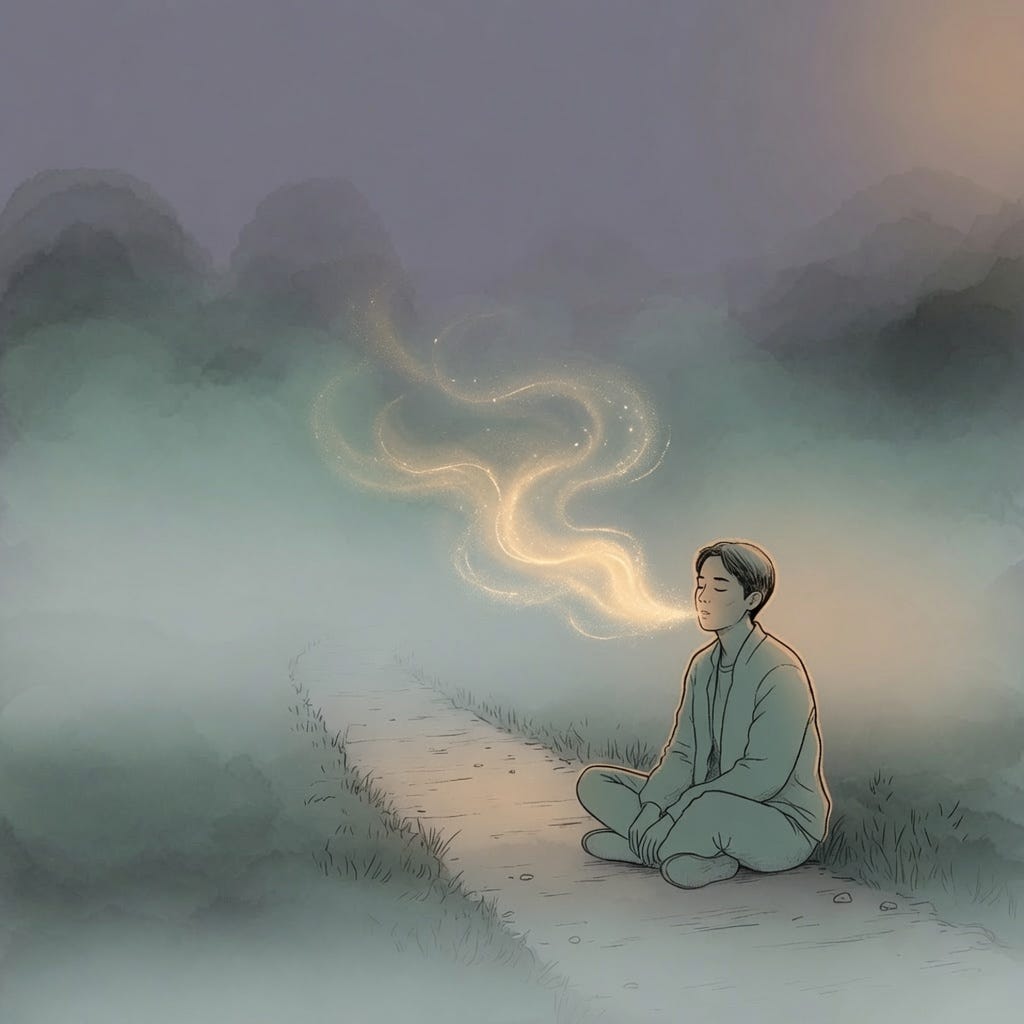
Last time, we talked about your brain and I tried to make it a more simplified, easier to visualize and understand version by introducing the Sarge (your amygdala) and The Professor (your prefrontal cortex). I don’t want to bore you with a bunch of scientific things, but it’s important to the discussion and going forward to understand a little of the mechanics. If you missed that article, feel free to stop right now, go back and read it. Or, I can give you the quick and dirty version here.
Two parts of your brain, The Professor and the Sarge, handle most of your reactions. In normal, calm, rational situations, The Professor runs things. But when the SHTF, as they say, the Sarge takes charge. He’s just like his name, aggressive, decisive and defensive, and he takes his job of protecting you very seriously. Too seriously sometimes, especially when your biggest danger is a mysterious email from your boss, not a rabid sabertooth tiger. But since the Sarge was created many thousands of years ago, way before computers and the internet, he’s no good at knowing the difference. So he charges in headfirst and boom. Anxiety.
So, we left off knowing there was a way to sort of manage it. In today’s modern world, when the brain gets going like it does, it triggers a lot of physiological responses. Most are out of your control. But you have one that is in your control. And it’s like the Stoics say, don’t worry about what you CAN’T control, focus on what you CAN control. You CAN control your breathing. You CAN’T control your heartrate, or blood pressure, cortisol levels or sweating. Breathing is the key. It’s the lever you can pull to get control back to The Professor and get the Sarge to stand down.
Your breath. The key.
—
I know, you’re like, “what’s a Stoic”? Or maybe you already know. Good for you! That puts you ahead. But in case you don’t know, the Stoics, people like Marcus Aurelius and Epictetus and others, realized that there are things in your control, and things that aren’t. And the path to a happy life (yes, yes, a happy wife is the usual answer), is to understand that and determine which is which. And spend your energy where it’s most effective, not where it’s wasted.
So now, when the Sarge fires up, he raises your heart rate, cortisol level, adrenaline, blood pressure. He’s getting you ready to fight. Or run. And all those things are in his control. But not yours. So a Stoic would look at those things and say, let it go. Don’t fight it. Don’t add to it. You can’t stop it or reverse it. But, the breath is something that’s kinda weird. If you don’t think about it, it happens, and the Sarge controls it. Increasing your oxygen levels, getting your muscles prepared to move. But if you want, you can hold your breath. Or speed it up. Just by thinking it. You have total control when you choose to take that control. Oooo, how very Stoic of you. Epictetus didn’t know what the vagus nerve was, but he knew where you should put your attention.
So what happens when you control your breath, and what exactly should you do? You should slow your exhale down. So you don’t even need to change ALL of your breathing, just the out part. The Letting Go part.
So you have this nerve, the vagus nerve. It’s a long, wandering nerve that connects your brain to most of your major organs. And it has two modes of operation. When Sarge is in charge, the sympathetic branch takes over. Your heart rate goes up, your body goes on high alert, and boom, you’re ready to go. When you extend your exhale longer than your inhale, you switch on the parasympathetic branch. Your body wants to rest and digest. That’s your body’s signal that the fire is out, the war is over, time for some R&R.
So that’s it. The exhale. A longer exhale than inhale tells your body that “we’re safe”. You’ve seen it all the time, when someone gets done with something strenuous, or runs into the cave at the nick of time to avoid the hungry Bengal tiger, they always “whew!” it out. That’s a long exhale signaling that we made it, we’re ready for some food and sleep. And that’s when the Sarge chills and The Professor gets back into the driver’s seat.
So, in the real world, how do I do this? Easy. Breathe in for 2 to 4 seconds, then breathe out for longer, like 6 to 8 seconds. Done. Do that for two to three minutes. You don’t need to be sitting cross-legged. You don’t need to chant or say “Ommmmm”. You just breathe out longer than you breathe in.
This isn’t some metaphysical ritual. It’s not archaic or esoteric or arcane. It’s practical. It’s physiological. It’s a physical nerve that tells your body to calm down.
—
What’s really cool about this is that Taoist breath practices go back thousands of years. They have this thing called Wu Wei, which is working with nature instead of against it, yielding instead of forcing. It shows up in breathing the same way it shows up in Taoism. Don’t fight the body, move with it. Find the flow and use it.
Zen Buddhist monks were basing their entire lives around breath awareness centuries before anyone had even heard of the vagus nerve. They didn’t do it because science showed WHY it worked, they did it because it worked. They found the lever, through practice, and built traditions around it.
The Stoics came at it from a different angle. Through attention and deliberate pause, rather than formal breath practice, they landed in the same place. Marcus Aurelius wrote daily. Epictetus taught his students to create a gap between things that happen and their reaction to it. That gap is what the monks were working on. They just used a different architecture.
Crazy, right? All these practices and traditions separated by geography and time and yet they all found the same lever. That’s not a coincidence.
—
In the early 2000s, Sara Lazar at Harvard started scanning the brains of long-term meditators. She found that regular practice produces measurable structural changes in the brain. Thicker Professor and a stronger connection between The Professor and the Sarge. The Professor literally gets bigger and the phoneline between him and the Sarge gets stronger. Better reception. Can you hear me now?
Richard Davidson at the U of Wisconsin found similar results. Sarge still fires in long-term meditators, but there’s a pause, a gap if you will, between stimulus and response. Hmmm. Viktor Frankl, writing from a Nazi concentration camp in WWII, described that pause as the space where human freedom lives. Years later, neuroscientists could show it on an fMRI. Mind. Blown.
*** Science Alert ***
The phoneline between The Professor and the Sarge is called the uncinate fasciculus. And it gets stronger with practice. Use it and it grows. And The Professor gets LOUDER and the pause gets longer.
This is why breathing matters. You’re not just calming down now, you’re improving that phoneline for the future. You’re installing fiber optics!
Now that we’ve made it this far, I want to introduce you to my last character. I promise. He doesn’t have his own essay yet, but he earns a mention here because this is where he lives.
Sarge fires, The Professor analyzes, but this guy is built through practice. With time and repetition. He’s not reactive like the Sarge, and he’s not purely intellectual like The Professor. He’s practiced, steady. He’s the kind of person who’s been through enough that they don’t need to perform calm. They just are.
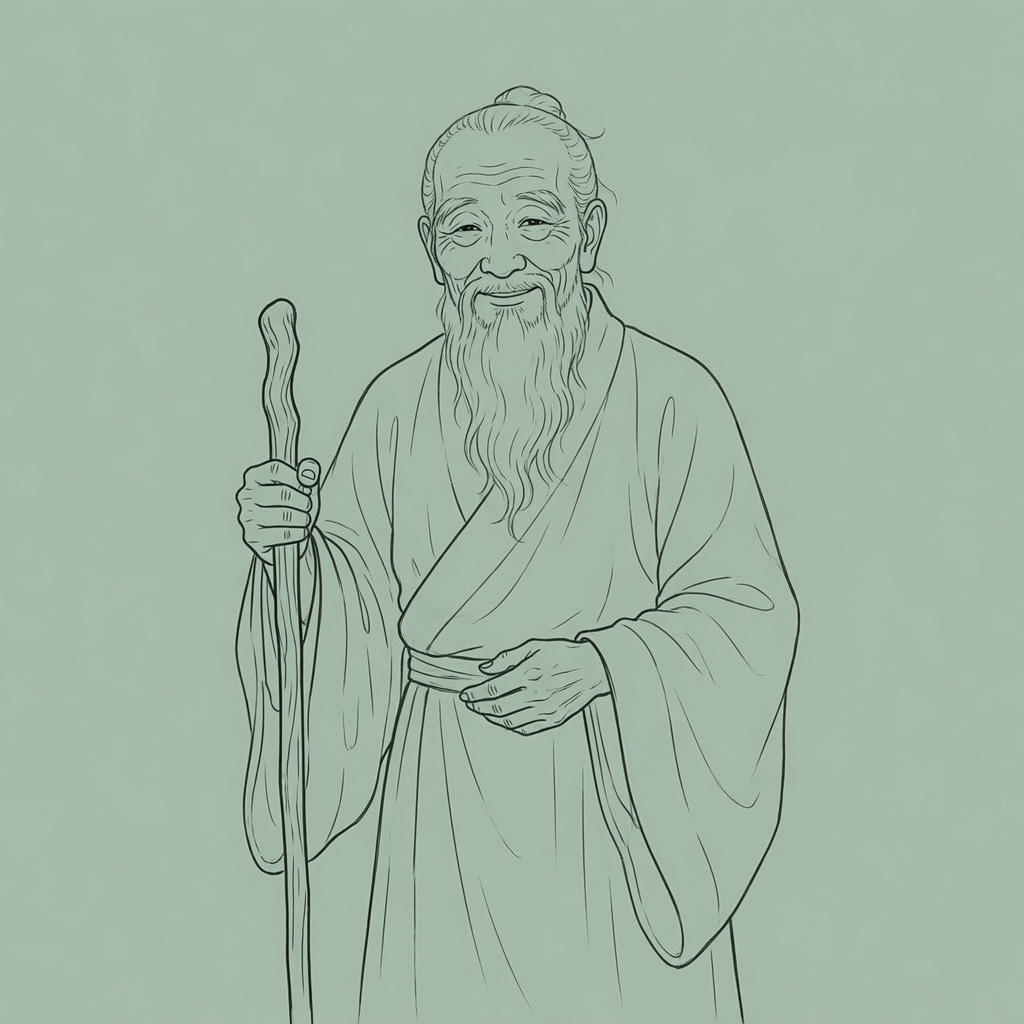
I call him The Sage.
The Sage isn’t a brain region. He’s what The Professor becomes when he’s been trained long enough, the version of you that doesn’t have to think about not panicking, because it’s already been built in. He represents everything we’ve pulled from Taoism, Zen Buddhism, Stoicism, and neuroscience, wrapped into something easier to visualize than, say, the uncinate fasciculus. And I won’t try typing that again, I won’t ask you to remember it, say it, read it, or even think about it again. Well, maybe not. We’ll see. But The Sage is a nicer package.
—
So none of this is a quick fix. If it was, I would’ve been fixed years ago. The Taoists knew it, the Buddhists knew it, the Stoics knew it. Neuroscience confirms it. So what you’re building is a practice. Consistency matters more than intensity. A few minutes a day, regularly, does more than an hour once a week. The brain changes slowly, like most real change.
But you don’t have to start with ten minutes. You can start tonight. You could start right now!
2 to 4 counts in. 6 to 8 counts out. Two minutes.
Not a program. Not magic. Just practice.
Slow down. Be quiet. And let it go.
— R